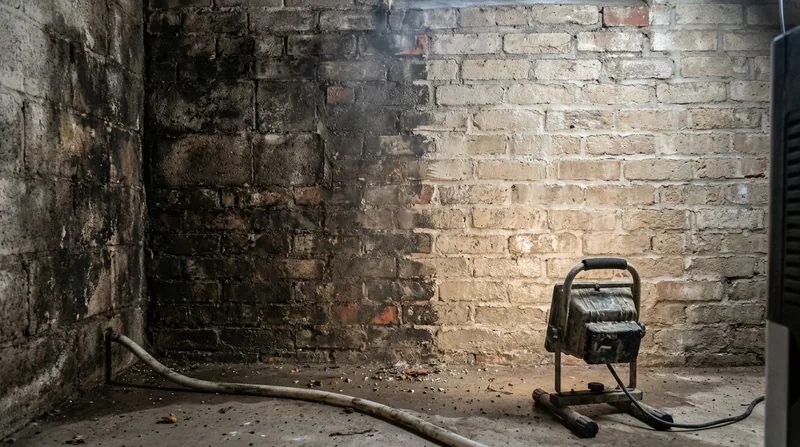




Basement Mold Remediation in Fort Collins: Fix the Moisture, Not Just the Mold
Fort Collins sits right where the plains meet the Front Range, and the ground under your house tells the story. Expansive clay and bentonite over Pierre Shale swell when wet, then heave slabs and walls through hard freeze-thaw cycles and dry, sunny winters. Old Town and the Laurel School district still have 1880s to 1910s Victorians on local sandstone and brick foundations, while the Eastside and Westside bungalows sit on full basements that have been taking spring snowmelt and summer cloudbursts since the 1920s. When Basement Mold Remediation in Fort Collins is done right, it starts with finding the water path, not just scrubbing the wall. We handle the moisture fix and the remediation together, so the musty smell does not come back the next irrigation season. If you are still in the diagnostic stage, start with a free basement inspection before anyone quotes a treatment.
Why Basement Mold Keeps Coming Back in Fort Collins Homes
Mold needs moisture and a food source, and Northern Colorado basements supply both. The clay soil traps water against the foundation, the water table rises with lawn irrigation and the old irrigation ditches, and the wall stays damp long after the rain stops. In Fossil Creek, Ridgewood Hills, Harmony, Windsor, and Timnath, the 1990s to 2020s poured basements are tight enough that trapped humidity condenses on cool structural floors. In Avery Park and Rossborough, the garden-level basements of 1950s to 1970s ranches wick moisture up through the slab. The failure mode that dominates here is hydrostatic pressure pushing water through hairline cracks and porous mortar, not a one-time leak.
- You smell a musty odor that gets stronger after the snowmelt and again in July and August.
- You see white efflorescence or dark staining on the lower block or poured wall.
- You find damp drywall, peeling paint, or soft baseboards along the perimeter.
- Your sump pump runs constantly or has failed during a spring storm.
- You notice condensation on the slab, ducts, or stored boxes through the irrigation season.
Any one of these means moisture is still active, and treating the mold without fixing the water path only buys you a season.
Key info: A 1910s Westside bungalow with a sandstone foundation and no footing drain will wick water differently than a 2015 Harmony two-story with a poured basement and a working sump. We scope the remediation to the actual wall assembly, not a template.
For the official permit and code side of foundation and drainage work in this city, check the City of Fort Collins building department before you schedule structural or drainage changes.
How We Run Basement Mold Remediation in Fort Collins
We work in a fixed order because remediation without moisture control is wasted money. First we find the source, then we contain and treat, then we correct the drainage or humidity problem that let the mold grow. That sequence matters most in older Fort Collins homes where the wall is brick or sandstone and the moisture is coming through the masonry itself.
- We inspect the basement perimeter, the wall base, the sump basin, and the window wells to locate the active moisture path.
- We set up containment with plastic sheeting and negative air pressure so spores do not spread to the rest of the house.
- We remove porous materials that cannot be saved, such as wet drywall, insulation, and swollen trim.
- We treat affected framing, block, and slab surfaces with an antimicrobial application and HEPA-vacuum the area.
- We correct the moisture source with the right fix, whether that is sealing a wall, extending a downspout, or installing an interior perimeter drain.
- We verify dryness with moisture readings before we close out the job and leave you a written summary.
The last step is the one most homeowners forget to ask for, and it is the one that tells you the job actually worked.
Key info: On a 1950s ranch in Avery Park with a garden-level basement, we commonly find mold on the lower foot of the framed wall where the slab meets the plate. The fix is a basement wall sealing detail plus a dehumidification plan, not a full excavation.
Remediation and Moisture-Control Approaches We Use
The right method depends on what the wall is made of and where the water is coming from. Here is how we match the approach to the Fort Collins housing stock.
| Approach | Description | Best for |
|---|---|---|
| Surface treatment and HEPA cleanup | Containment, antimicrobial application, and HEPA vacuuming of affected block, framing, and slab. | Light surface growth with a known, fixable moisture source. |
| Material removal and rebuild | Cut out wet drywall, insulation, and trim, then dry the framing before closing. | Bungalows and ranches with soaked finished walls after a sump failure. |
| Drainage correction | Interior perimeter drain, sump upgrade, or downspout and grading fixes to stop the water path. | Homes with hydrostatic pressure and recurring seepage at the wall base. |
| Humidity control | Dehumidification and ventilation sized to the basement volume through the irrigation season. | Tight poured basements in Fossil Creek and Harmony with condensation, not seepage. |
| Crack and wall sealing | Epoxy or polyurethane injection for cracks, plus sealing details at the wall base. | Sandstone and brick foundations in Old Town with localized seepage. |
We tell you plainly when simple crack sealing is enough and when the real problem is hydrostatic pressure that needs an interior drain tile system instead.
Basement Mold Remediation Cost in Fort Collins: What to Expect
Most residential remediation jobs in this market start around From $1,500, which covers a contained treatment of a typical basement wall area plus the moisture diagnosis. The number moves with square footage affected, how much porous material has to come out, and whether the moisture fix is a sealing detail or a full drainage correction. A small area of surface growth on a block wall in a Westside bungalow sits near that starting point. A finished basement in Windsor with soaked drywall, a failed sump, and mold behind the framing lands well above it.
- Affected square footage and how many walls are involved drive the labor hours.
- Material removal adds disposal and rebuild cost when drywall or insulation is saturated.
- The moisture fix itself, sealing versus drainage, is often the largest line item.
- Access matters in Old Town Victorians with low clearance and finished ceilings.
- Urgency adds cost when a spring storm or sump failure forces a fast response.
Get two or three written estimates and compare the scope, not just the bottom line, because a low bid that skips the moisture fix will not hold. Our full pricing overview breaks down how we build a quote.
Basement Mold Remediation Near Me: How to Vet a Contractor Near Fort Collins
A remediation contractor should be able to explain the moisture path in plain language and show you where the water is entering. If the pitch is only about spraying and fogging, keep looking. Ask for proof of licensing and insurance, and confirm the certificate covers mold remediation work in Colorado. Get multiple estimates in writing, and call references from jobs in Fort Collins or Loveland done at least a year ago.
- Confirm the company carries liability insurance and can send a certificate before work starts.
- Ask whether structural or drainage changes need a permit from the local building department.
- Check references for basements with the same construction as yours, brick, block, or poured.
- Get the scope in writing, including containment, removal, treatment, and the moisture fix.
- Ask how they verify dryness at the end, and get that answer in the proposal.
When you are ready to talk through your basement, contact us for a free estimate and we will tell you straight what the moisture is doing.
Basement Mold Remediation in Fort Collins: Pricing Guide
| Service | Price | Details |
|---|---|---|
| Contained surface treatment | Starting at $1,500 | Includes containment, antimicrobial application, HEPA cleanup, and moisture diagnosis on a typical wall area |
| Material removal and rebuild | Starting at $2,400 | Adds removal of saturated drywall and insulation plus drying before the wall is closed back up |
| Remediation with drainage correction | On estimate | Needs an on-site look because the moisture fix may require an interior perimeter drain or sump upgrade |
| Travel | Included | in Fort Collins and surrounding areas, no separate call-out or mileage fee |
| Estimate | Free | Response within 24h at (970) 670-9581, no obligation to book |
Indicative pricing, the exact cost depends on square footage, finish, and site access. Free personalized estimate within 24h at (970) 670-9581.


