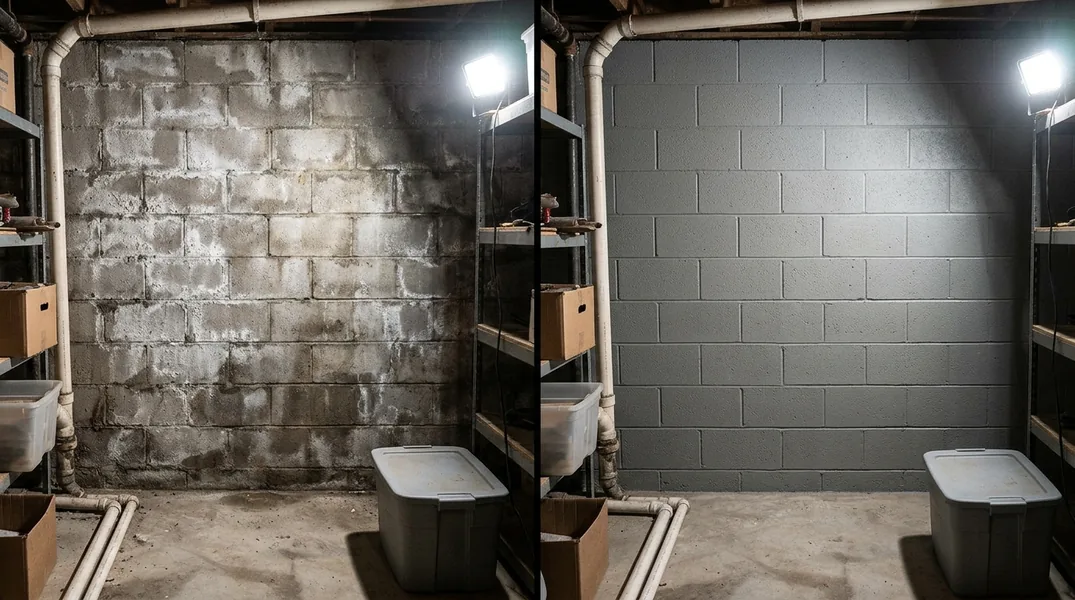
Why Summer Brings Water Problems to Fort Collins Basements
Most homeowners expect basement water issues in spring, when snowmelt and heavy rain saturate the soil. In Fort Collins, however, some of the worst seepage shows up in July and August, when the skies are clear and the lawn sprinklers are running every day. The reason is simple: water is water, and the ground does not care whether it arrives as rain or as irrigation. When you apply hundreds of gallons to your yard week after week, that moisture has to go somewhere, and gravity pulls it down toward your foundation.
Fort Collins sits on soils that include clay and compacted fill in many neighborhoods, and those layers drain slowly. Instead of soaking away, irrigation water accumulates in the upper soil profile and raises the local water table, sometimes just a few feet below grade. Once the soil around your foundation is saturated, hydrostatic pressure builds against the walls, and water finds the weakest point: a hairline crack, a cold joint, a tie rod hole, or the seam where the slab meets the wall. That is how a summer irrigation basement leak happens on a day with zero rainfall.
Irrigation Ditch Seepage: The Hidden Source of Summer Groundwater
Fort Collins is crisscrossed by a historic network of irrigation ditches and laterals that carry water to farms and neighborhoods throughout the growing season. Many of these ditches are unlined, which means water seeps steadily into the surrounding soil for weeks at a time. If your home backs up to a ditch, sits downhill from one, or was built on ground that was once irrigated farmland, your property may be receiving a constant underground supply of water all summer long. This irrigation ditch seepage can raise the water table across an entire block, which explains why several neighbors may develop wet basements in the same season.
Ditch seepage is also sneaky because it does not announce itself. You will not see a puddle in the yard. Instead, you may notice a damp, musty smell in the basement, efflorescence (the white powder) on the concrete, or a small trickle along the base of a wall after the ditch runs for several days. Homeowners who keep an eye on the ditch schedule often notice that seepage appears a day or two after the water starts flowing. That pattern is a strong clue that summer groundwater basement moisture is coming from the ditch rather than from your own sprinklers.
How to Tell If Your Wet Basement Is Irrigation Related
Before you spend money on repairs, it helps to diagnose the source. A Fort Collins wet basement caused by irrigation usually shows a few telltale signs. The seepage tends to appear during dry, hot weather rather than during storms. It may be worse on the side of the house nearest the ditch, the sprinkler zone, or a downslope neighbor. The water is often clear and appears low on the wall or at the floor seam, and it may come and go with the irrigation schedule. If you shut off your sprinklers for a week and the seepage slows, you have found at least part of the problem.
Other clues include damp carpet or padding along exterior walls, rust on the bottom of a water heater or furnace, and a white chalky residue on the concrete. It is also worth checking your gutters and downspouts, because roof water dumped next to the foundation can mimic irrigation seepage. If you are not sure what you are dealing with, a professional inspection can separate irrigation issues from drainage problems, foundation cracks, and high water tables. You can request a free estimate and get a clear answer before the problem spreads.
Smart Watering and Yard Drainage Fixes That Reduce Seepage
The good news is that you can often reduce summer seepage without major construction. Start by watering deeply but less often, and run your sprinklers in the early morning so the soil has time to absorb moisture before the heat of the day. Adjust heads so they do not spray directly against the foundation, and consider replacing the zone closest to the house with drip irrigation or low-water landscaping. Make sure downspouts discharge at least four to six feet away from the walls, and keep the soil graded so it slopes away from the foundation on all sides.
For homes near a ditch, you may not be able to stop the seepage at the source, but you can manage it on your property. A shallow swale or French drain along the uphill side of the yard can intercept groundwater before it reaches the house. Window wells should have tight covers and clear gravel drains. If your basement already has a sump pump, test it before the irrigation season and make sure the discharge line carries water well away from the foundation. These steps are inexpensive and can make a real difference in how much water presses against your walls.
When to Call a Pro for Basement Waterproofing Near Me in Fort Collins
Yard fixes help, but they cannot always overcome a rising water table or a persistent ditch. If you have tried adjusting irrigation and grading and still see water, it is time to look at a permanent solution. Basement Waterproofing addresses the water at the foundation rather than in the yard, and it is the right approach when hydrostatic pressure is the real culprit. A professional assessment will tell you whether an Interior Drain Tile System with a sump pump, an Exterior Basement Waterproofing membrane and drain, or targeted Foundation Waterproofing is the best fit for your home.
Interior systems are popular in Fort Collins because they work year-round, even when the ground outside is frozen or saturated, and they can be installed without excavating the entire perimeter. Exterior systems shine when the problem is clearly outside, such as a ditch-side wall or a failed original drain tile. Many homes benefit from a combination. If you want to understand what a project involves before you commit, ask about pricing and request a written scope. A good contractor will explain the cause, the fix, and the expected result in plain language.
Protecting Your Home All Summer Long
Summer seepage is a seasonal problem, but the damage it causes is cumulative. Each wet season can widen cracks, degrade concrete, and encourage mold in the basement. The homeowners who stay ahead of it are the ones who watch their irrigation, manage runoff, and address small signs early. If you live near a ditch or have noticed dampness that appears only in the dry months, take it seriously. It is far easier and less expensive to correct a minor leak than to repair a finished basement after water has been sitting in the walls.
Fort Collins Waterproofing helps homeowners in Loveland, Windsor, and Greeley as well as Fort Collins, so we understand how local soils and ditches affect basements. Call (970) 670-9581 to schedule an inspection, or reach out online for a free estimate. We will identify the source of the moisture and recommend a solution sized to your home, not a one-size-fits-all package.
Looking for a professional basement waterproofing contractor in Fort Collins? Fort Collins Waterproofing responds fast for all your basement waterproofing needs.
Get a Free QuoteOur services: Basement Waterproofing · Interior Drain Tile System · Exterior Basement Waterproofing